

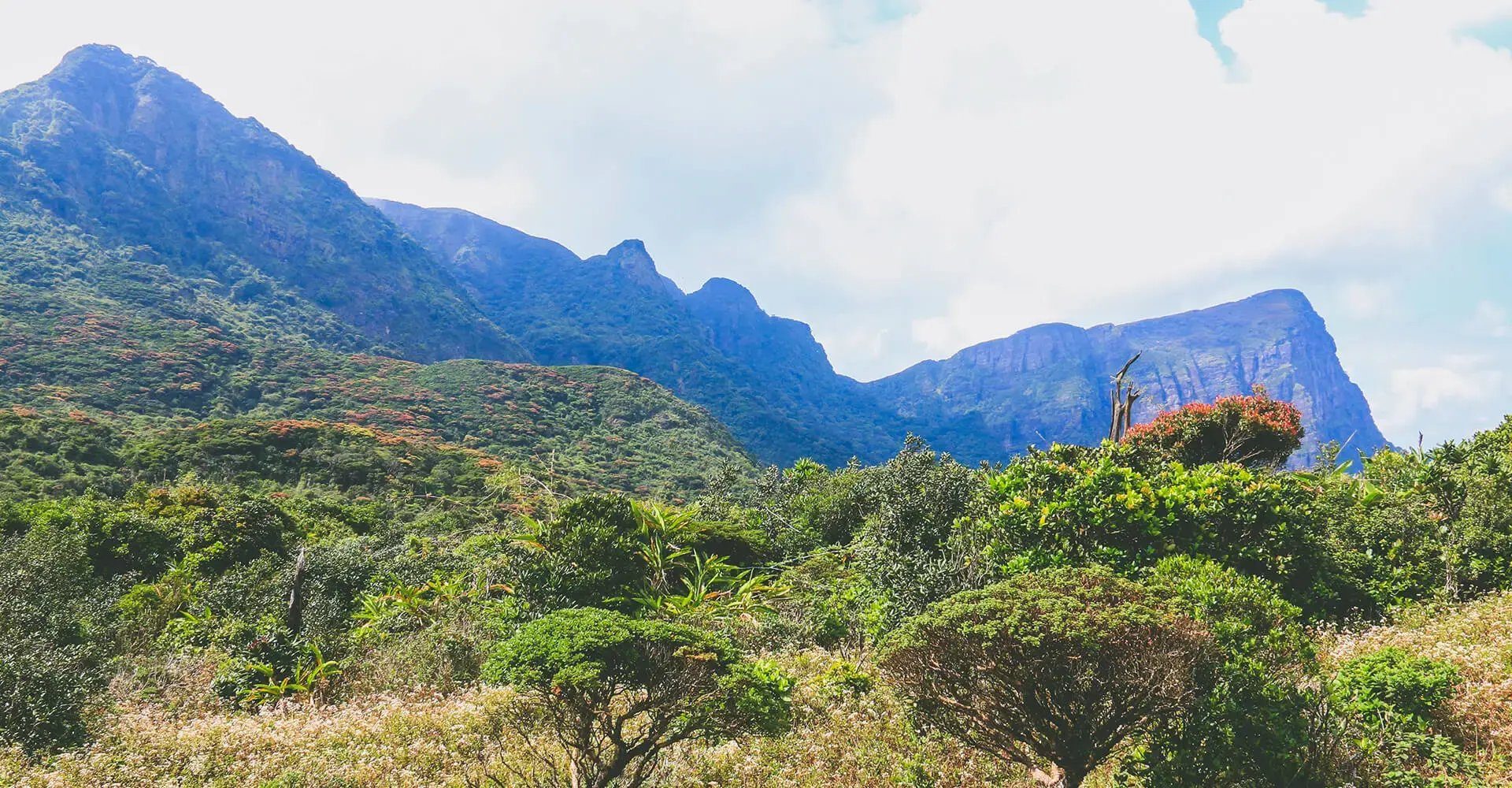
The short answer
February and March are the best months to hike the Knuckles. They're the driest and clearest on most trails. January and April are close behind. July and August are a good second window on the eastern side around Meemure. October to December is the wettest stretch, with the most leeches and the highest risk of landslides.
It's one of the first things people ask us, and the honest answer starts with another question: which side of the mountains are you going to?
The Knuckles range sits right in the path of both of Sri Lanka's monsoons. So it doesn't have one rainy season. It has two, and they hit different slopes at different times of the year. That sounds like bad news, but it actually works in your favour. When one side of the range is soaking wet, the other side is often perfectly walkable.
Here's how the year really plays out, month by month, and what it means for the three things everyone asks us about: rain, mist and leeches.
Think of the Knuckles as a wall across the middle of the island. From around May to September, the southwest monsoon blows in and dumps most of its rain on the western slopes, the Riverston and Matale side. From around October or November to January, the northeast monsoon does the same thing to the northern and eastern slopes, where Meemure and the Kalu Ganga valley are.
In between, there are two "inter-monsoon" periods, around April and again in October and November. These bring heavy afternoon thunderstorms that can hit anywhere in the range.
Put it all together and parts of the Knuckles get somewhere between 2,500 and 5,000 mm of rain a year. That's what keeps the cloud forests green and the waterfalls running all year. It's also why the weather on a summit can turn in twenty minutes, even in the "dry" season.
| Month | Rain | Mist | Leeches | Our take |
|---|---|---|---|---|
| January | Easing off | Morning mist | Some | Good Cool and fresh. The east can still be damp early in the month. |
| February | Low | Clear mornings | Few | Best Our favourite month for peaks and views. |
| March | Low | Hazy afternoons | Few | Best Warm days. Some streams run low, so carry more water. |
| April | Afternoon storms | Builds after midday | Rising | Good Great if you start early and finish by lunch. |
| May | Heavy in the west | Frequent | Many | Mixed The southwest monsoon arrives. |
| June | Wet, windy west | Frequent on west ridges | Many in the west | Mixed Choose eastern trails like Meemure. |
| July | Often a drier spell | Patchy | Moderate | Good Especially on the eastern side. |
| August | Similar to July | Patchy | Moderate | Good Expect strong wind on open ridges. |
| September | Monsoon fading | Patchy | Moderate | Mixed Changeable. Keep plans flexible. |
| October | Heavy storms | Heavy | Peak | Wet Short, low routes only. |
| November | Wettest | Heavy | Peak | Wet Avoid long treks. Landslide risk. |
| December | Heavy in the east | Heavy | Many | Wet Meemure side is wet. Ask us before booking. |
Weather in the mountains never follows a calendar exactly. Use this as a guide, not a guarantee.
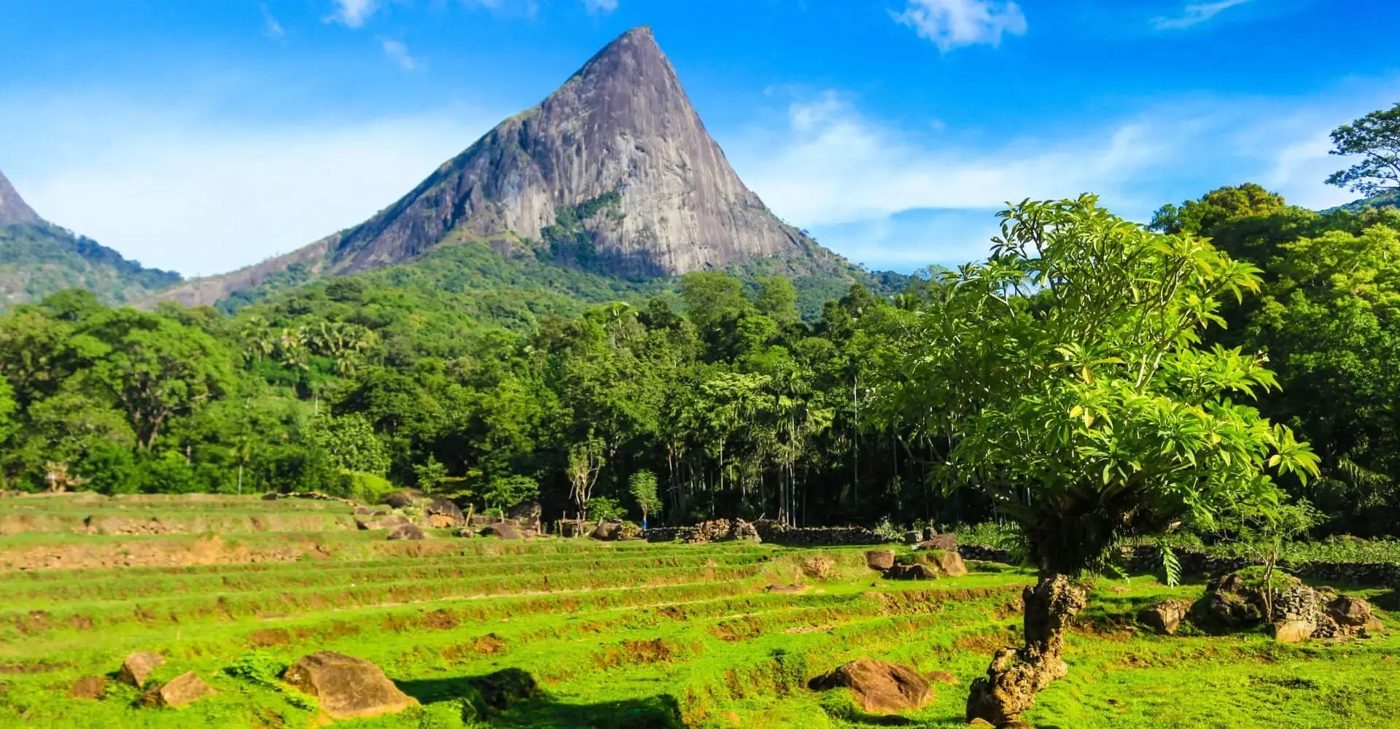
If you can pick any time, pick this one. By January the northeast monsoon is running out of steam, and by February most of the range has dried out. Mornings are cool and clear, and on a good day you can see ridge after ridge rolling off toward the horizon. This is when the big viewpoint hikes are at their best: the Five Peaks, Leopard Rock and Manigala.
There are two things to watch out for. First, water. In March especially, some of the small streams you'd normally refill from simply disappear. Carry at least two litres each. Second, sun. Places like the open rock on Lakegala have zero shade, and the mountain air fools people into thinking it isn't strong. Bring a hat and sun cream.
April is still a good month, but the afternoons change. Clouds build up after midday and you'll often get a short, loud thunderstorm around 2 or 3 pm. Start at sunrise, reach the top by late morning, and you'll usually miss it.
This is when knowing the "wall" matters. The southwest monsoon hits the western slopes hard, so ridges on the Riverston side can be wet, misty and very windy for days at a time. It's not dangerous for everyone, but it's not much fun if you came for the views.
The eastern side is a different story. Meemure and the valleys around it sit in the rain shadow at this time of year, and July and August in particular often bring a drier, brighter spell. It's a great time for camping in Meemure, the Meemure waterfall hike, or a two-day trek that stays mostly on the eastern trails.
Leeches are out in May and June, especially on the western side. More on how to handle them below.
This is the time of year we're most careful about. The October to November inter-monsoon brings the heaviest storms of the year, and then the northeast monsoon settles over Meemure and the eastern slopes into December and January. Trails get slippery, streams you'd normally hop across turn into proper rivers, and the leeches are everywhere.
The bigger concern is landslides. At the end of November 2025, Cyclone Ditwah dropped extreme rain over the central highlands in a very short time. Roads in the Knuckles region were washed out, and Meemure was cut off from the rest of the country for months. Our team went back in July 2026 to climb Lakegala, and you can read what the trail and the village looked like after the cyclone.
That doesn't mean you can't visit in these months. Shorter, lower walks can still be beautiful, and the waterfalls are at their most powerful. But for long or multi-day treks, talk to us first. We'll tell you honestly which routes are open and whether it's worth going.
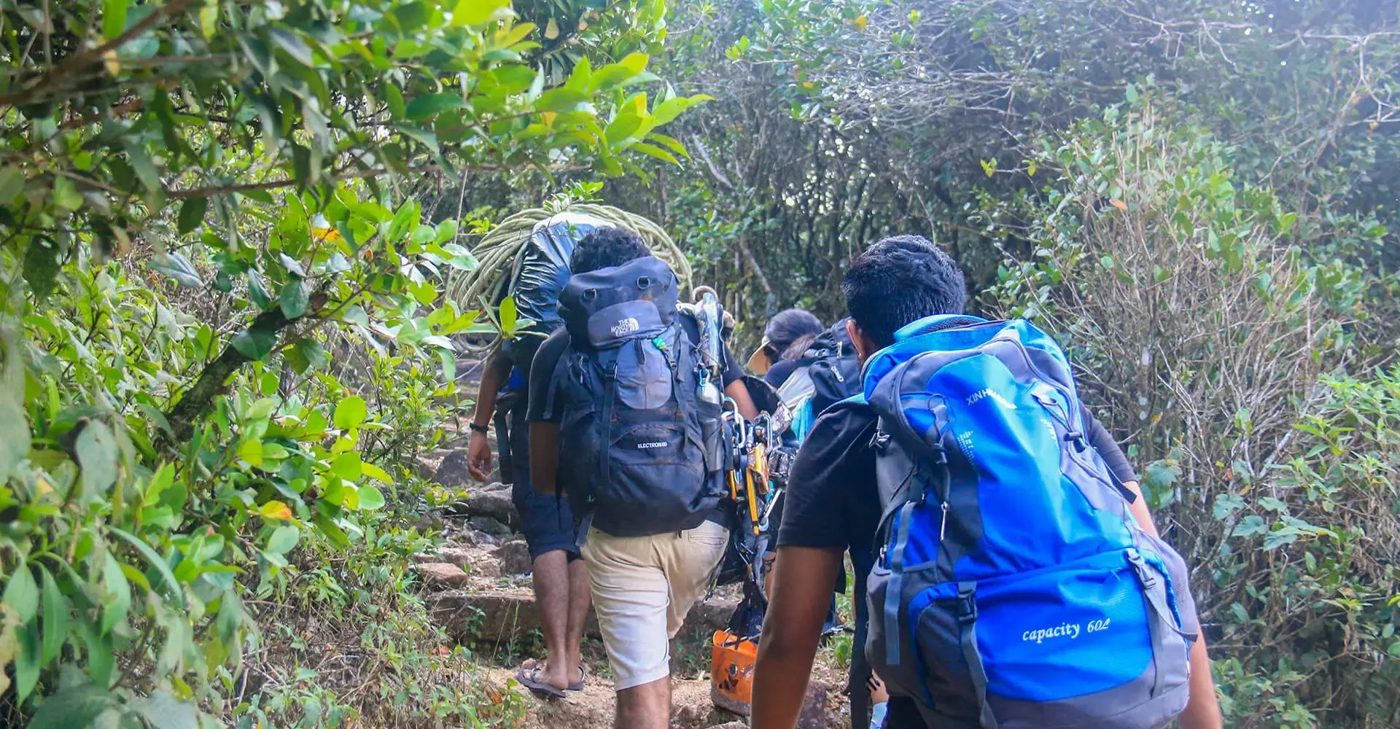
Mist is part of the Knuckles' identity. The old Sinhala name, Dumbara Kanduvetiya, translates as the "misty mountain range" (we wrote a whole piece on the legend behind the name). You will almost certainly walk through cloud at some point, and honestly, that's part of the magic.
The pattern is fairly reliable. Most days start clear, cloud starts creeping up the valleys by late morning, and by the afternoon the higher peaks are often wrapped in it. So if views are the goal, the rule is simple: start early. In the wetter months, mist can sit on the ridges all day.
One safety point. In thick mist, the trails all start to look the same, and it's very easy to wander off the path. This is one of the main reasons a registered local guide is required in the conservation forest. Stay close to yours.
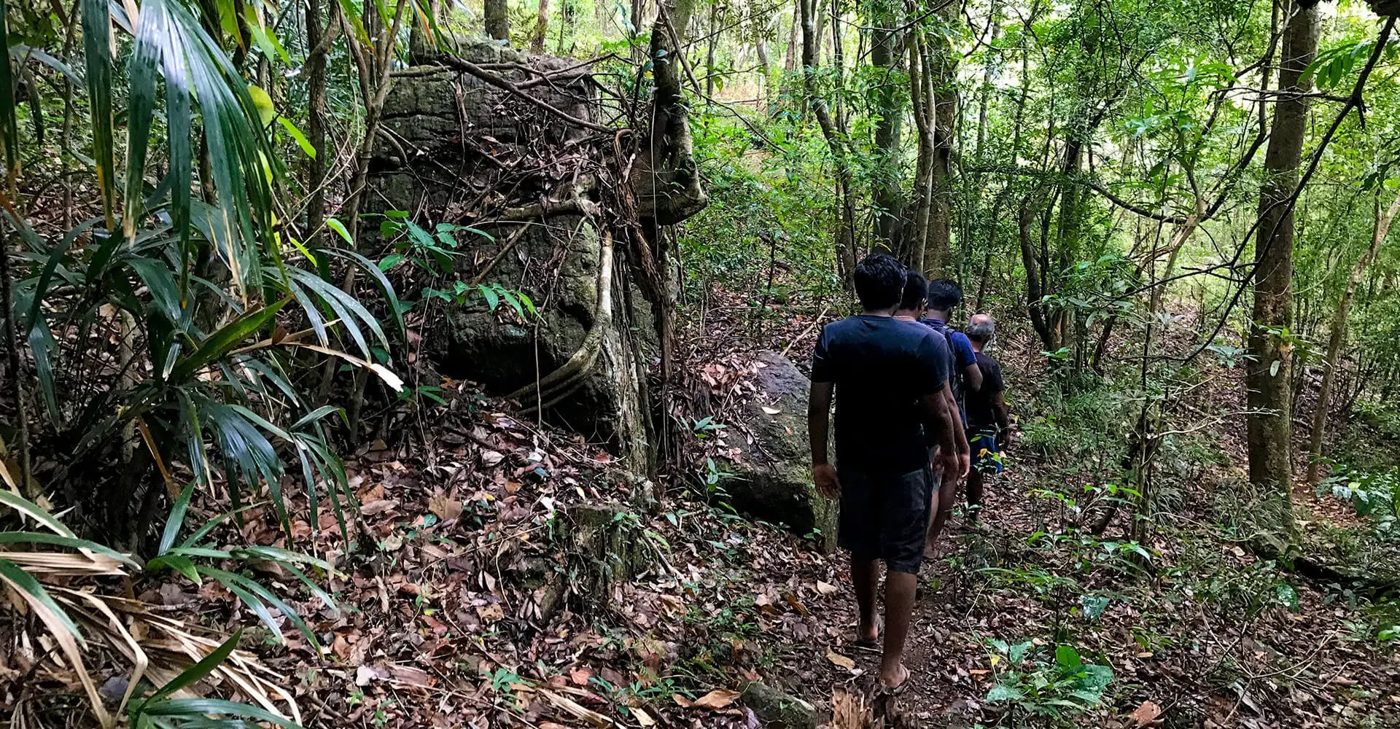
Let's be straight about leeches. They're common in the Knuckles, they're harmless, and they're nowhere near as bad as people imagine. They live in damp leaf litter and wake up whenever the ground is wet, so they're worst from October to January and in May and June on the western side. Even in the dry months, a single heavy shower can bring them out for a day.
A bite doesn't hurt. You usually only notice when you see a small red patch on your sock. It may bleed for a while afterwards, because leeches release a substance that stops blood clotting. That's normal.
What actually works:
To remove one, slide a fingernail under the small sucker at the thin end, then the bigger one, and flick it off. Don't yank it, and don't burn it. Clean the spot with antiseptic and keep walking.
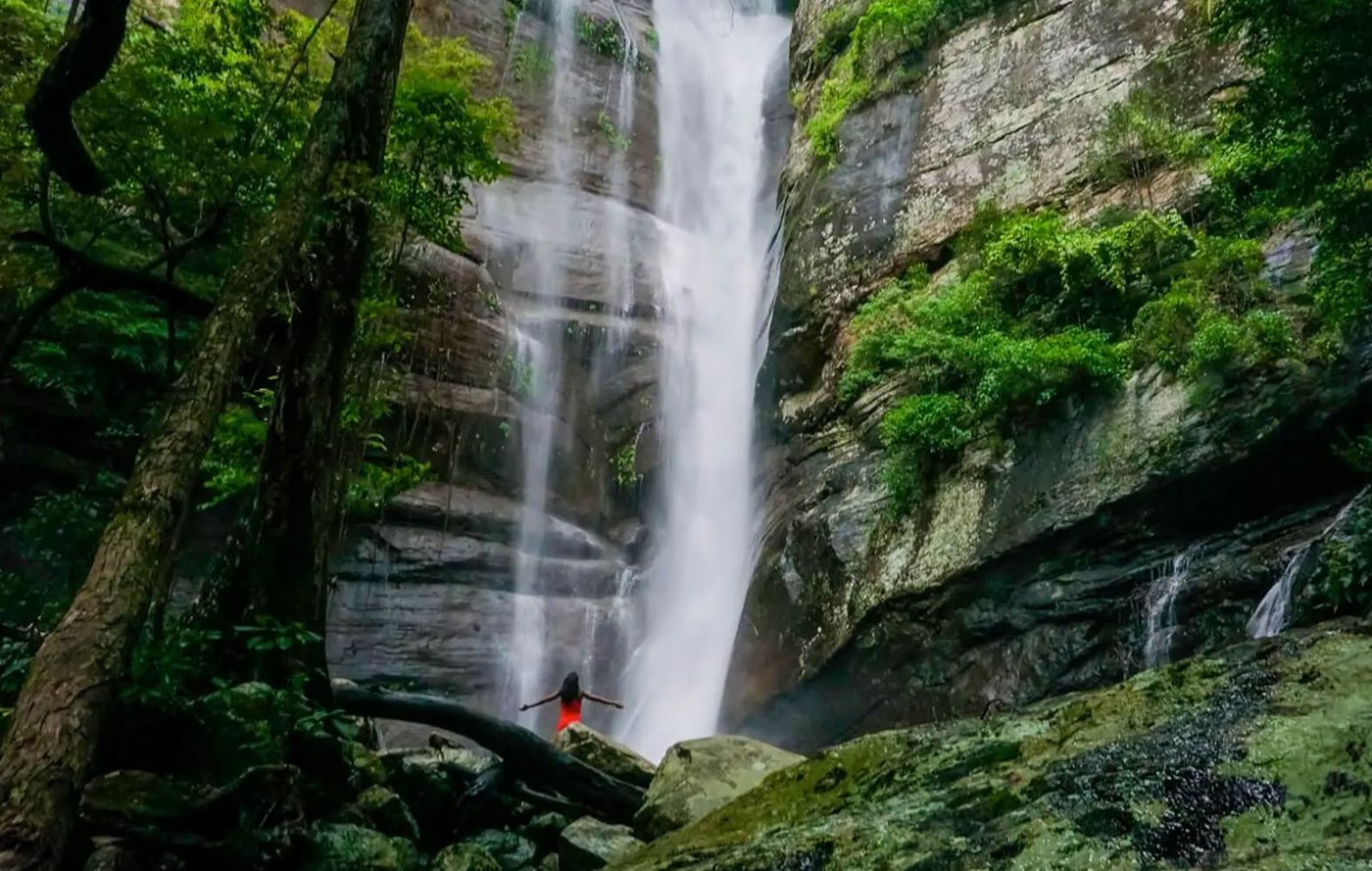
Here's the catch. The months with the best weather are the months with the weakest waterfalls. By late March, a few of the smaller falls are down to a trickle.
Our tip is to come in January or early February. The rain has mostly stopped and the trails are drying out, but the falls are still full from the monsoon. If you're visiting mid-year, the Meemure side in June to August is another good option. Duwili Ella and Dumbara Ella and the Meemure waterfall hike are both worth planning around.
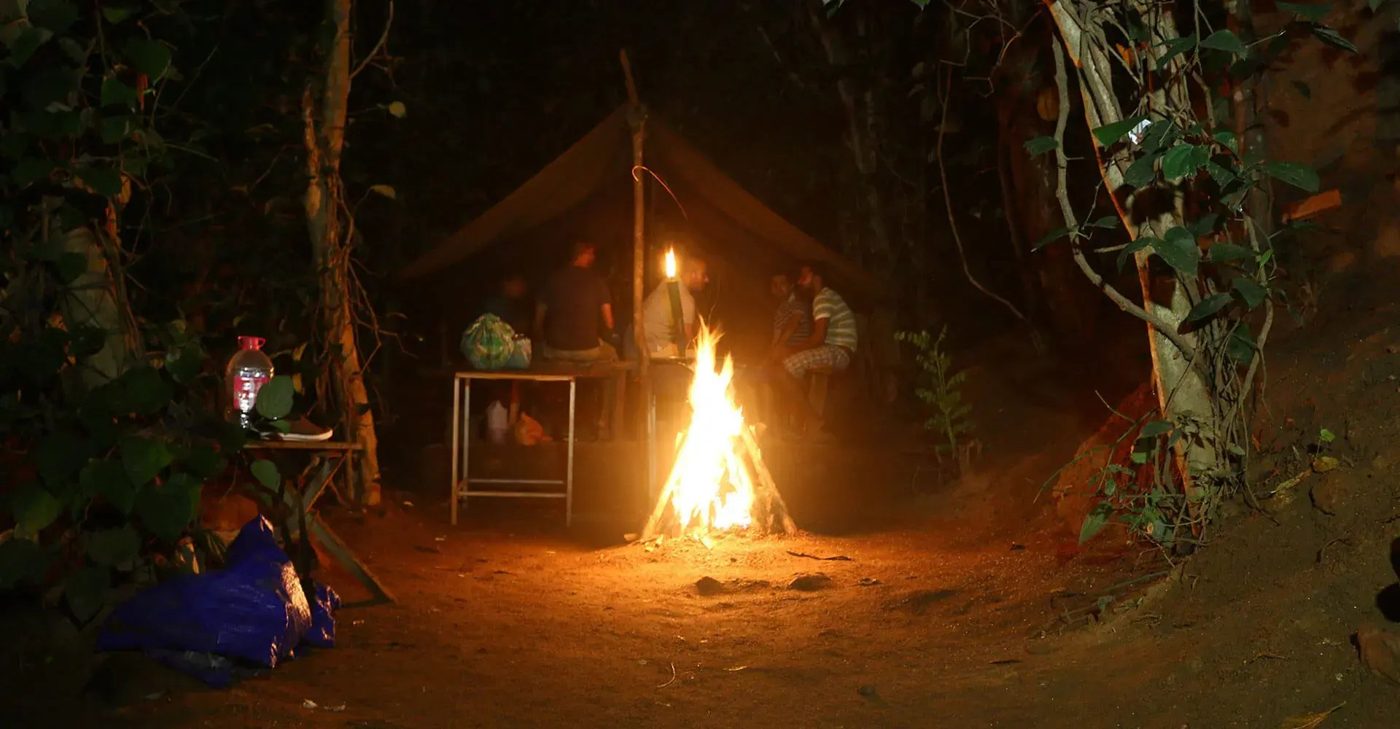
Down in the valleys it's warm and humid. Up on the ridges it's a different climate. Once the sun goes down, especially from December to February, it gets properly cold, and a lot of first-timers are surprised by it. Whatever month you come, pack:
For the full list, with a checklist you can tick off as you pack, see what to pack for a Knuckles trek. For the permit rules, see our guide to permits and responsible trekking in the Knuckles.
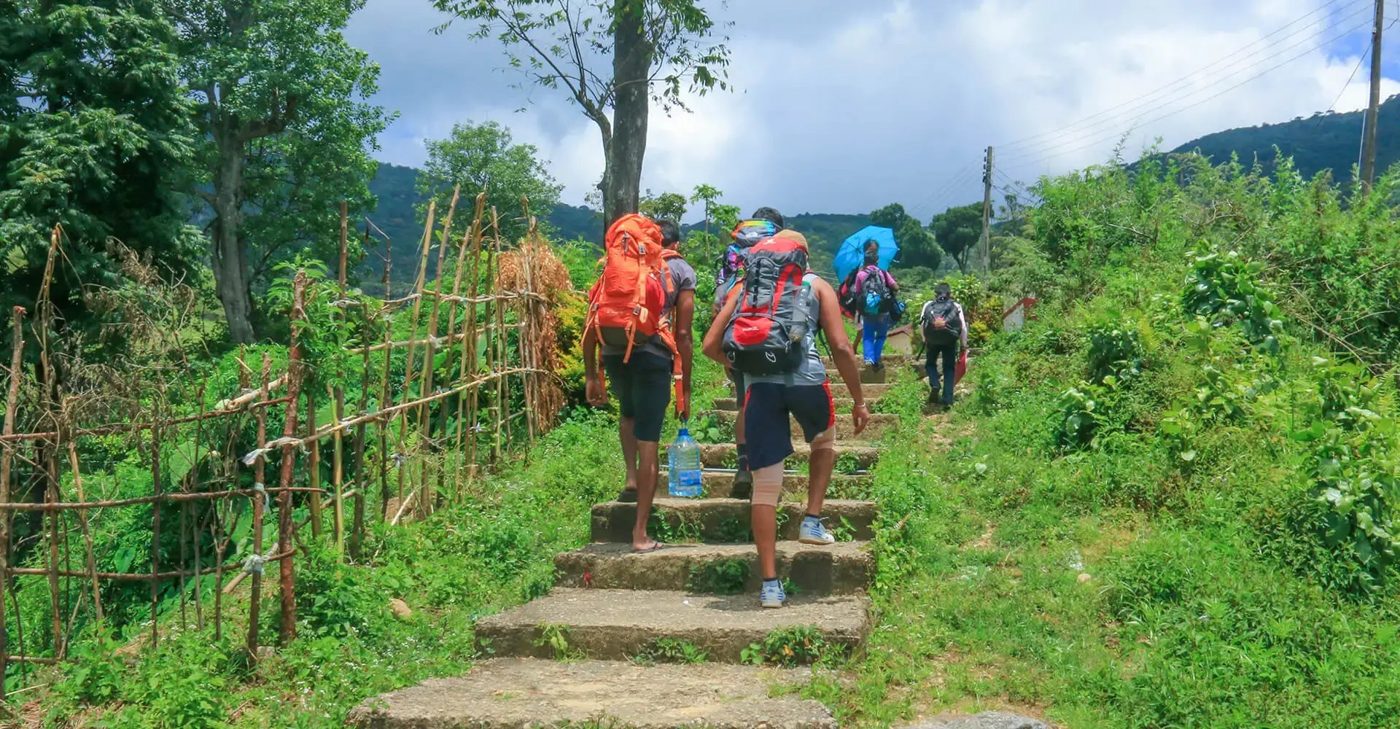
Can't make those months? Don't cancel the trip. Most of our hikes can run outside the peak season too. The trick is matching the right trail to the time of year.
Send us your dates on WhatsApp. We'll tell you what the weather usually does that week and which trails make the most sense.
February. It's usually the driest and clearest month across most of the range, with cool mornings and very few leeches. March is a close second.
Yes, with a guide and the right route. Shorter, lower trails are fine in most months. During heavy rain from October to December, we avoid long ridge walks and multi-day treks because of slippery ground, swollen streams and landslide risk.
They're mostly a wet-season thing, from October to January and in May and June on the western slopes. They can show up in any month after heavy rain, though, so pack leech socks to be safe.
During the monsoon months, mist can cover the ridges all day. In the dry season, it usually rolls in from late morning, so start early if you want clear views.
Yes. The Knuckles Conservation Forest is a protected area, and you need an entry permit and a registered guide. Our guided hikes take care of both for you. More on permits here.
Sources: rainfall figures from Encyclopaedia Britannica and the UNESCO World Heritage listing for the Central Highlands of Sri Lanka. Cyclone Ditwah details from Rapid Adventures. Photos by Rapid Adventures and Visit Meemure.